Planning was spread across too many tools.
Travelers moved between discovery, booking, notes, budgets, maps, and messaging just to assemble one trip.
Designing an all-in-one travel planning application from concept through high-fidelity prototype and go-to-market strategy.
The project in 30 seconds
Trip planning required people to piece together destinations, budgets, group preferences, and itineraries across disconnected tools.
I combined survey research, interviews, affinity mapping, and competitive analysis to define the product opportunity and prioritize the experience.
Create one flexible planning space that personalizes discovery, supports group decisions, and keeps the practical details connected.
Product Strategy, UX Research & Experience Design
Semester project
Surveys, interviews, affinity mapping, competitive analysis
Figma, Miro, Google Forms
The challenge
Design an all-in-one travel platform that reduces planning complexity without sacrificing personal control over decisions.
Most travelers juggle five-plus tools to plan a single trip. Research surfaced five recurring needs: centralization, budgeting, group coordination, personalization, and lower planning effort.

Travelers moved between discovery, booking, notes, budgets, maps, and messaging just to assemble one trip.
Preferences, approvals, and changes lived in separate conversations, making it difficult to keep a shared plan current.
People needed recommendations that felt relevant without losing visibility into cost, timing, or control.
Competitors handled individual parts of a trip well, but few connected budgeting, personalized suggestions, group input, and itinerary planning in one experience.
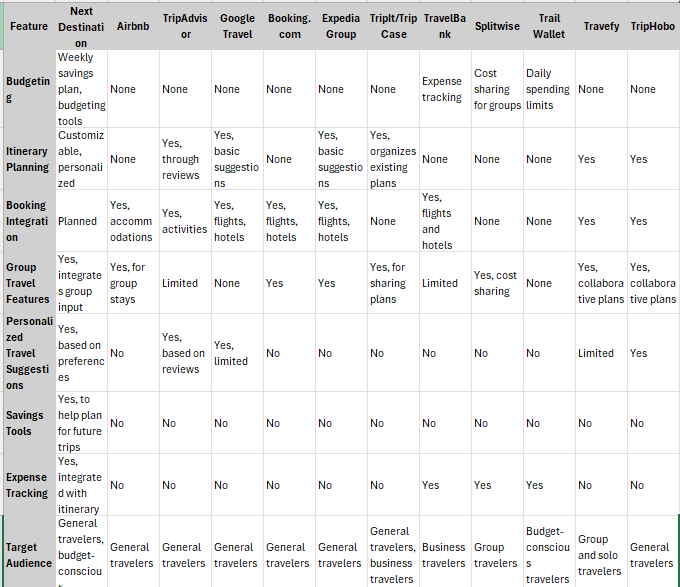
Connecting the dots
Too many planning tools
Group decisions in scattered threads
Budgets and preferences treated separately
The opportunity wasn't another destination finder. It was a shared planning system connecting decisions across the entire trip.
The solution direction
The concept connects personalization, collaboration, budget awareness, and itinerary planning so each decision improves the next instead of creating another tab to manage.
Onboarding captures interests, budget, travel style, and group needs so recommendations begin with useful context.
Collaborative itineraries bring decisions, updates, and group planning into one place instead of scattered threads.
Budget visibility, local options, and itinerary structure help travelers move from inspiration to a plan they can actually use.

Expected impact & next validation
Test whether travelers can build and adjust a shared plan with fewer tool changes, less coordination effort, and clearer budget tradeoffs.
Because this was a concept and prototype project, these are intended outcomes—not invented launch metrics.
Design from research, not assumptions. Group coordination turned out to be a bigger pain point than destination discovery itself.
Multi-channel content development that turns a single topic into a system of assets across formats and platforms.


